

Published Articles

I believe Americans have not forgotten how to disagree—we have forgotten how to argue well. Disagreement simply means stating opposing positions. Real argument requires something harder: explaining why I believe what I believe, offering evidence, confronting serious objections, and remaining open to the possibility that a good argument might change my thinking.
Too much of our politics now rewards the opposite. We label people instead of answering their ideas, assume the worst about their motives, excuse contradictions on our own side, and treat changing one's mind as weakness. The result is a political culture in which everyone knows where everyone stands, but we spend surprisingly little time examining why.
I argue that our constitutional system was built for disagreement, not unanimity. From the Federalist and Anti-Federalist debates to Madison, Douglass, and Lincoln, Americans have confronted profound disagreements by making arguments that others could examine and challenge. Argument does not guarantee agreement, nor can it resolve every conflict. But in a self-governing republic, it places reasons between our political conclusions and the exercise of power.
I see this firsthand in legislative work. Questions, objections, hearings, amendments, debate, executive review, and judicial review can be frustrating and inefficient, but that is partly the point. They force ideas to withstand scrutiny and recognize that the first version of an answer—or a bill—may not be the best one.
Ultimately, I am calling for Americans to argue more, not fight more. We should listen closely enough to describe an opponent's position fairly, distinguish disputes about facts from disputes about principles, confront evidence rather than attacking its source, and be willing occasionally to say, “That changes my thinking.” That isn't weakness. It means the conversation mattered.
A constitutional republic does not require us to agree. It requires us to preserve a system in which today's minority can continue making its case and potentially persuade its way into becoming tomorrow's majority. We don't all have to leave an argument persuaded. But we do have to keep arguing.
Click Here to read the full article.
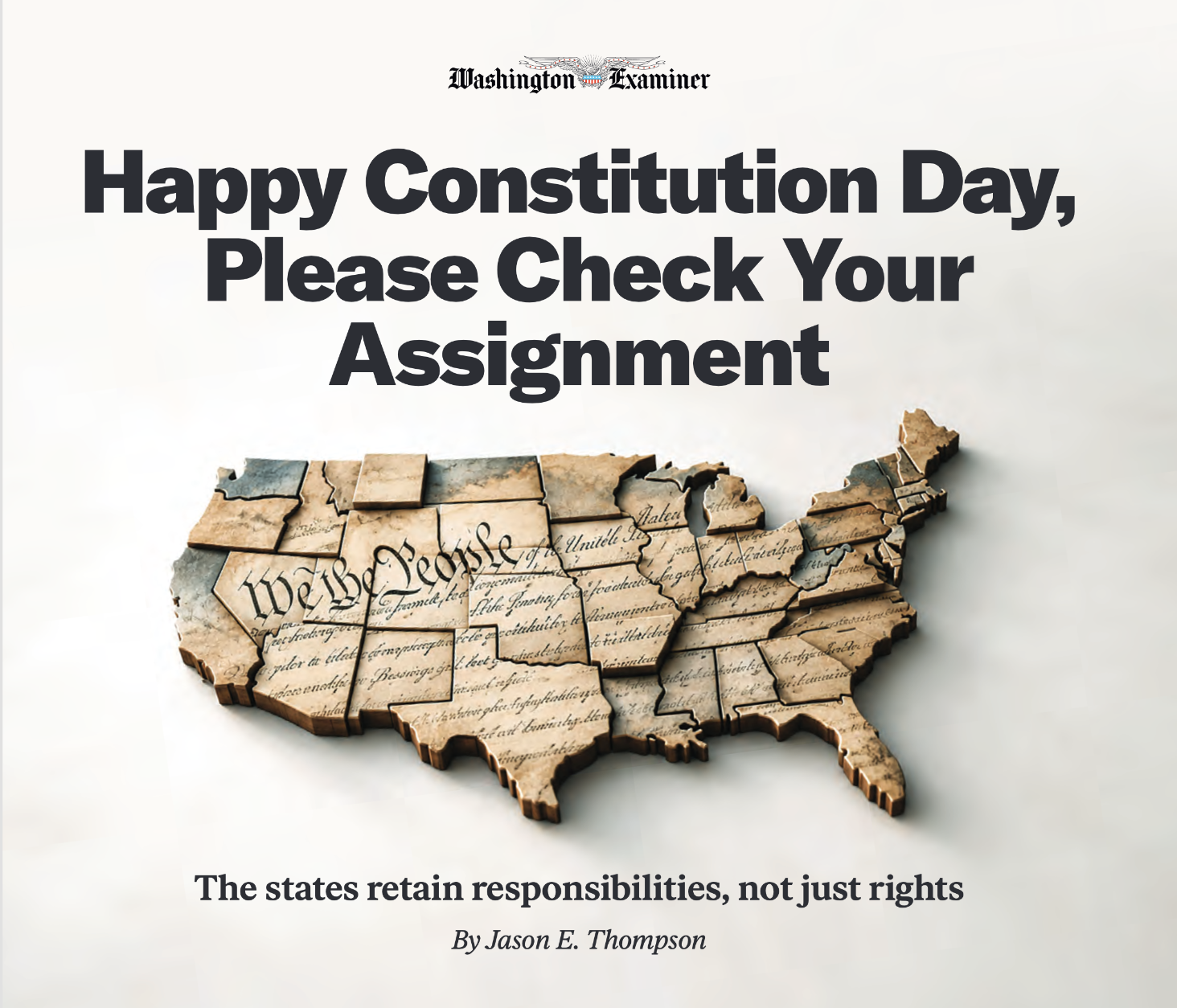
In this article, I argue that American federalism should be understood as a system of responsibilities as well as rights. States are not simply political units that defend themselves against federal overreach. They are constitutional governments with their own institutions, powers, budgets, and obligations, and they are expected to use that authority to govern. When difficult or expensive problems arise, our political system often pushes them upward toward Washington, which can blur responsibility, concentrate power, and make it harder for citizens to know which level of government should be held accountable.
The article explores federalism through the Constitution, James Madison’s description of state and federal governments as the people’s “agents and trustees,” the Tenth Amendment, state constitutions, the Supremacy Clause, anti-commandeering doctrine, and the changes brought by the Reconstruction Amendments. I argue that the right question is not simply whether the federal government or the states have authority, but also whether a government has the capacity to act effectively, whether cooperation is needed, and who should answer to the public for success or failure.
I also emphasize that federalism is not a guarantee that one level of government always knows best. Its value lies in dividing power, allowing different states and local communities to respond to different conditions, bringing more government closer to the people, and making political decisions contestable in more places. The central argument is that federalism works best when citizens can identify who has authority, who has responsibility, and who is accountable for the result.
Click Here to read the full article.
In “Who Will Raise the Republic?”, I draw on Alexis de Tocqueville’s Democracy in America to argue that the strength and survival of the American republic depend less on government institutions themselves than on the habits, character, and civic responsibility of its citizens. Tocqueville observed that American liberty was sustained by families, churches, schools, voluntary associations, local governments, and neighborhoods—institutions where people learned cooperation, responsibility, sacrifice, and self-government. I warn that modern Americans increasingly delegate those responsibilities to government or withdraw into private life, weakening the civic habits upon which constitutional government depends. Drawing on his own experience in local government, he describes how communities flourish when ordinary citizens volunteer, attend meetings, serve on boards, coach children, care for neighbors, and accept responsibility without seeking recognition. As America celebrates its semiquincentennial, I argue that preserving the Constitution requires more than celebrating the Founders or maintaining constitutional structures; each generation must deliberately cultivate the character necessary to sustain them. Ultimately, the article asks whether Americans are willing to “raise the republic” anew by forming responsible citizens—beginning in families and extending through the institutions of civil society—who understand that liberty is both an inheritance and an obligation.
Click Here to read the full article.
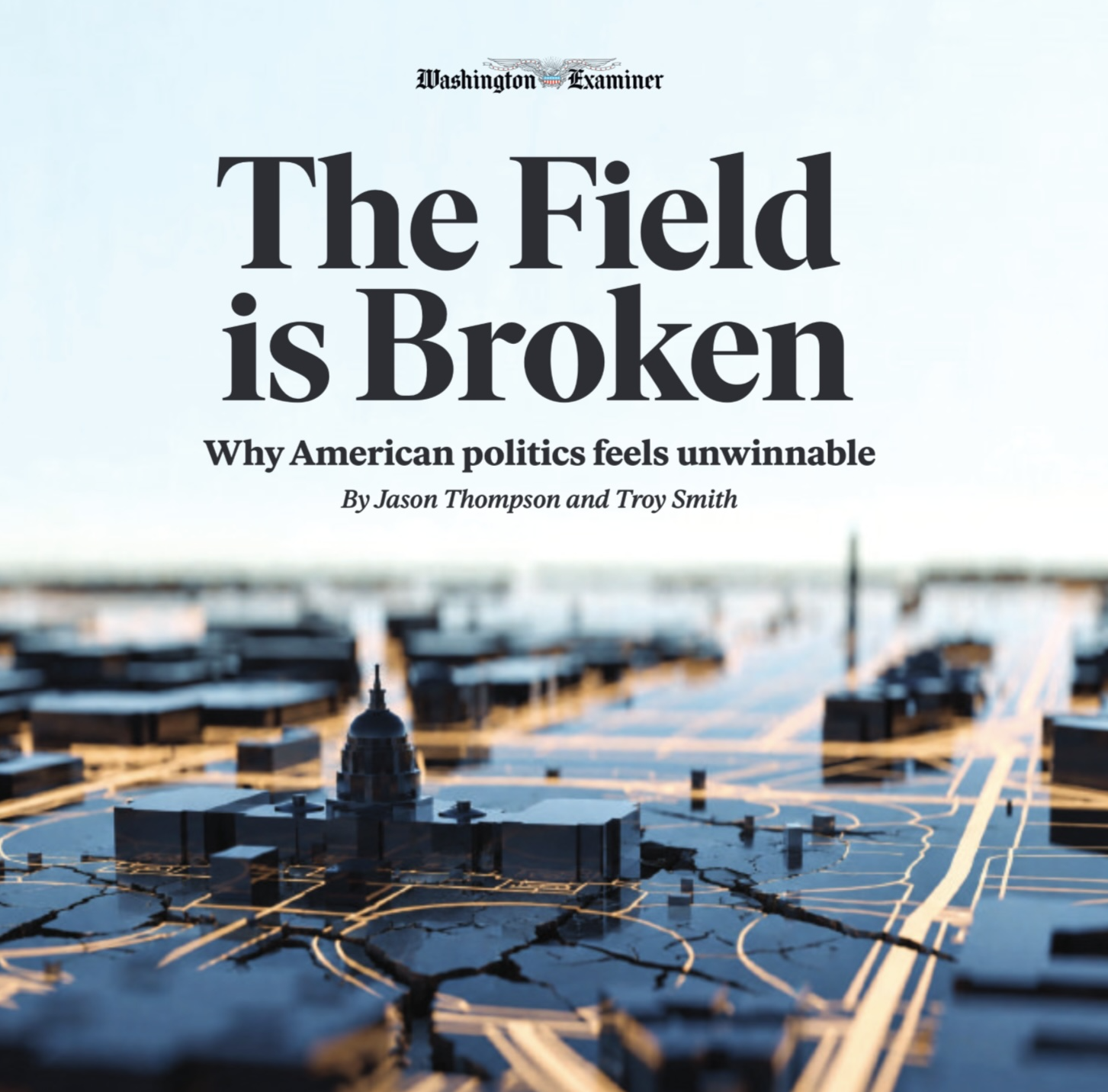
In this article, Dr. Troy Smith and I argue that Americans are increasingly frustrated not simply because of partisan disagreements, but because the constitutional structure of government has drifted away from its original design. We contend that power has become overly centralized in Washington, weakening federalism, reducing accountability, and turning every election into a high-stakes national battle while leaving citizens feeling disconnected from the decisions that affect their lives. We argue that the Founders intended states to serve as primary centers of governance for most domestic issues, with the federal government exercising only limited and defined powers. Using Utah's HB 488 and the National Federalism Initiative as examples, the article advocates restoring a healthier balance between state and federal authority, encouraging constitutional education for policymakers, and allowing states greater freedom to address local challenges. Ultimately, we suggest that America's growing political dysfunction stems less from which party is in power and more from a structural imbalance that has concentrated too much authority in Washington and weakened the federalist system designed to manage disagreement in a large and diverse republic.
Click Here to read the full article.